

In modern industrial environments, the reliability of assembled components often determines the success or failure of an entire system. Whether it’s rotating machinery, automotive assemblies, or heavy-duty equipment, securely bonding cylindrical parts is essential. This is where Loctite 680 stands out as a trusted solution. Designed as a high-strength retaining compound, it plays a critical role in ensuring tight fits, preventing loosening, and enhancing durability across a wide range of applications.
What Is Loctite 680?
Loctite 680 is a green, anaerobic adhesive specifically formulated for bonding cylindrical metal parts. Unlike traditional adhesives, it cures in the absence of air and in the presence of metal ions, making it ideal for close-fitting components such as shafts, bushings, bearings and sleeves.
Its primary function is to fill microscopic gaps between mating surfaces, creating a secure bond that distributes stress evenly. This reduces wear, eliminates fretting corrosion, and enhances load-bearing capacity.
How It Works as a Retaining Compound
Retaining compounds like 680 Loctite are engineered to improve the performance of press-fit or slip-fit assemblies. When applied between two cylindrical surfaces, the liquid adhesive spreads evenly and cures to form a solid thermoset plastic.
This process delivers several advantages:
- Eliminates the need for mechanical fasteners like pins or keys
- Prevents movement caused by vibration or thermal expansion
- Enhances torque transmission capabilities
- Seals joints against moisture and contaminants
Because of these properties, Loctite 680 is widely used in industries where precision and reliability are non-negotiable.
Key Industrial Applications
1. Shaft and Hub Assemblies
One of the most common uses of Loctite 680 is in bonding shafts to hubs. In applications such as motors, gearboxes, and pumps, the adhesive ensures a tight connection that resists rotational forces and prevents slippage.
2. Bearing Retention
Bearings are subject to constant stress and vibration. Using a retaining compound like 680 Loctite helps secure bearings in their housings, reducing the risk of movement and extending service life.
3. Bushings and Sleeves
In heavy machinery, bushings and sleeves must remain firmly in place to maintain alignment. Loctite 680 fills any gaps and creates a strong bond that resists shock loads.
4. Automotive Components
From transmission assemblies to engine parts, Loctite 680 is frequently used in the automotive sector to enhance performance and reliability.
5. Repair and Maintenance
It is also highly effective in restoring worn parts. Filling gaps and rebuilding tolerances, it allows maintenance teams to avoid costly replacements.
Key Benefits of Loctite 680
High Strength Bonding
Loctite 680 is known for its exceptional shear strength, making it suitable for demanding applications where components are exposed to heavy loads.
Gap Filling Capability
It can fill diametral gaps up to 0.38 mm (0.015 inches), making it ideal for slightly worn or imperfect parts.
Resistance to Environmental Factors
Once cured, the adhesive offers excellent resistance to heat, oil, and chemicals, ensuring long-term performance in harsh conditions.
Improved Load Distribution
Unlike mechanical fastening methods, it distributes stress evenly across the bonded area, reducing localized wear.
Corrosion Prevention
Sealing the interface between parts, it prevents moisture ingress and protects against corrosion.
Understanding Loctite 680 Cure Time
One of the most important considerations when using this product is the Loctite 680 cure time. The curing process depends on several factors, including temperature, material type, and gap size.
- Fixture Time: Typically around 10–15 minutes on steel
- Full Cure Time: Approximately 24 hours for maximum strength
- Temperature Influence: Higher temperatures accelerate curing, while lower temperatures slow it down
- Material Impact: Active metals like steel and iron promote faster curing, whereas passive metals like stainless steel may require a primer
Understanding the Loctite 680 cure time helps ensure proper application and optimal performance in industrial settings.
Best Practices for Application
To achieve the best results with Loctite 680, proper preparation and application are essential.
Surface Preparation
Clean all surfaces thoroughly to remove oil, grease, and contaminants. Using a suitable solvent ensures maximum adhesion.
Proper Fit
Although it can fill gaps, the best performance is achieved with close-fitting parts.
Application Technique
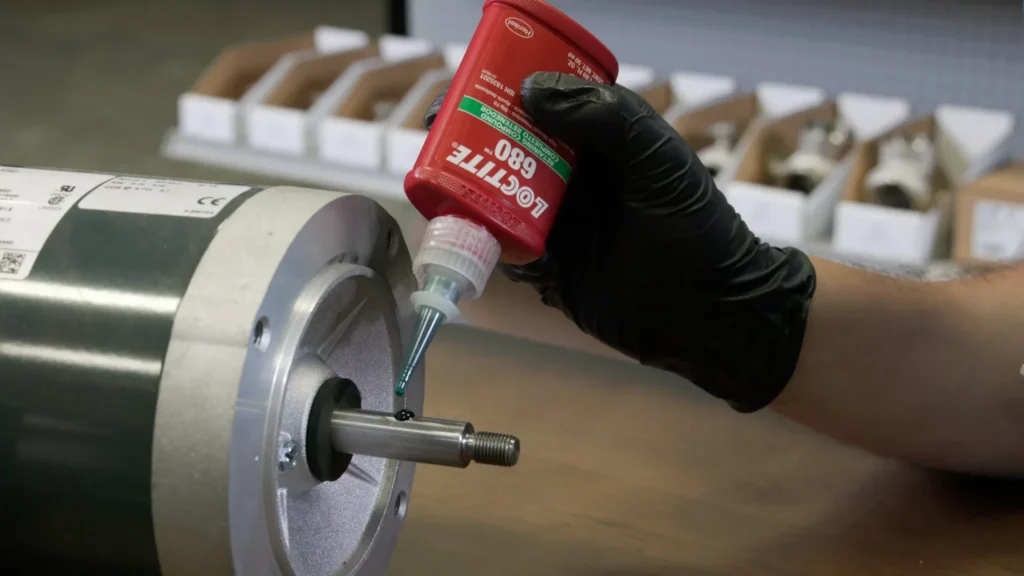
Apply the adhesive evenly around the circumference of the shaft or inside the housing. Ensure complete coverage without excessive use.
Assembly
Assemble parts immediately after application. The anaerobic curing process begins once the adhesive is confined between metal surfaces.
Curing Conditions
Allow sufficient time for curing before subjecting the assembly to load or stress.
Practical Use Cases
Case 1: Industrial Pump Repair
A maintenance team dealing with a worn shaft used Loctite 680 to restore the fit between the shaft and coupling. The result was a strong, reliable bond that eliminated vibration and extended the equipment’s lifespan.
Case 2: Gearbox Assembly
In a gearbox application, 680 Loctite was used to secure bearings in their housings. This prevented micro-movements that could lead to premature failure.
Case 3: Automotive Transmission
Automotive engineers used Loctite 680 to bond cylindrical components in a transmission system, improving torque transmission and reducing maintenance requirements.
Why Choose Loctite 680 Over Traditional Methods?
Traditional methods such as press fitting, welding, or mechanical fasteners have limitations. They can introduce stress concentrations, require complex machining, or fail under vibration.
In contrast, Loctite 680 offers:
- Simpler assembly processes
- Reduced machining costs
- Enhanced reliability
- Improved performance under dynamic loads
Its versatility and effectiveness make it a preferred choice for engineers and maintenance professionals alike.
Final Thoughts
In today’s demanding industrial landscape, the need for reliable and efficient bonding solutions is greater than ever. Loctite 680 has proven itself as a high-performance retaining compound capable of meeting these challenges.
From securing bearings and shafts to restoring worn components, its applications are vast and impactful. By understanding its properties, benefits, and proper usage, including the critical aspect of Loctite 680 cure time, industries can significantly improve the durability and performance of their assemblies.
Whether you’re designing new equipment or maintaining existing systems, incorporating 680 Loctite into your processes can lead to stronger, longer-lasting, and more efficient results.